Introduction: The Shift from Search to Answers
The Shift from Search to Solutions
The search industry is evolving at a faster rate than in the past. Ranking on Google’s first page is no longer the ultimate goal of traditional Search Engine Optimization (SEO). Users today want instant answers, not just search results.
This evolution has ushered in a new era known as Answer Engine Optimization (AEO).
Instead of using blue links, businesses are now optimizing for AI-powered answer engines such as ChatGPT, Google Gemini, Bing Copilot, and Perplexity AI, which display a single conversational response instead of ten.
So what is SEO, and how can you use it to ensure that your digital strategy is future-proof?
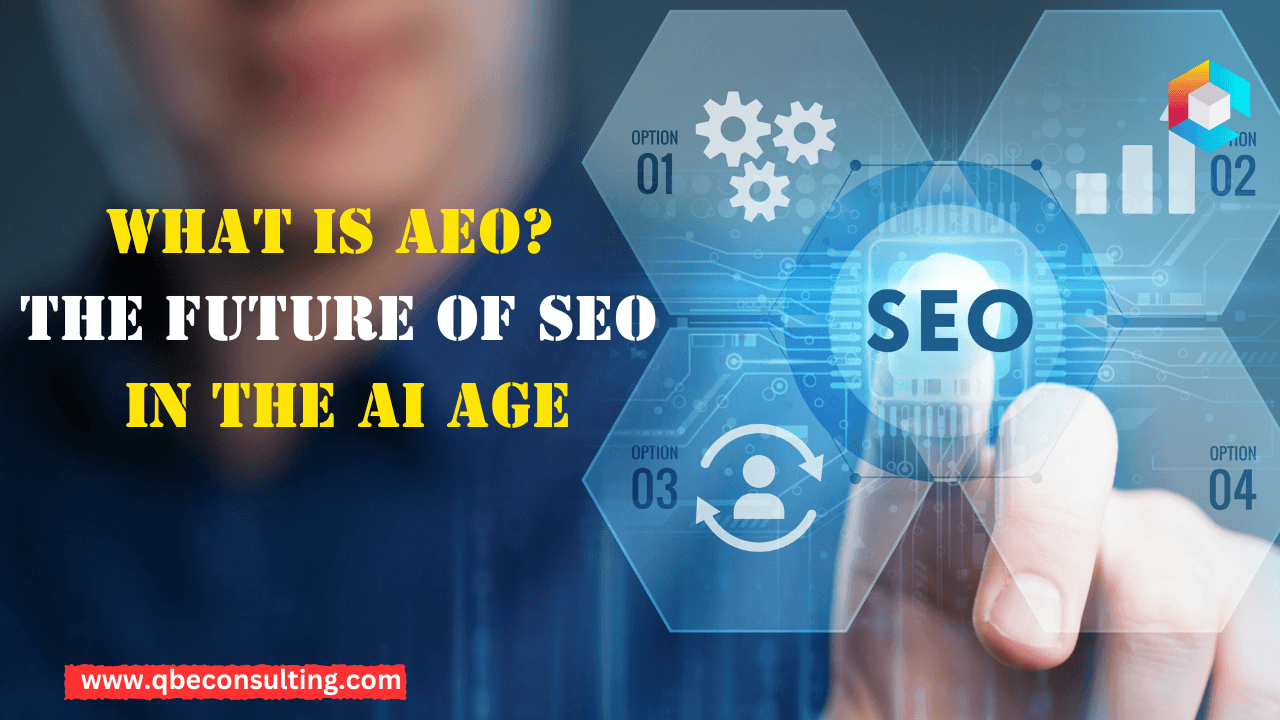
What is AEO, or Answer Engine Optimization?
Answer Engine Optimization (AEO)c is the process of making your content easier for AI-driven systems and search assistants to read, extract, and deliver as direct answers to user questions.
In short, AEO makes your brand the “final answer” that people use when they ask questions on platforms like ChatGPT, Google’s AI Overviews, or Siri.
AEO is different from SEO because it looks at how visible a website is in AI-generated responses, voice assistants, and zero-click searches. SEO is all about getting a website to rank high in search engine result pages (SERPs).
Why AEO Matters in 2025 and Beyond
Search is changing dramatically with AI and conversational interfaces leading the way.
Here’s why Answer Engine Optimization matters now more than ever:
- Growth of Search Engines Driven by AI
The way people find information is evolving thanks to tools like Bing Copilot, Google Gemini, and ChatGPT. Instead of “searching,” users now “ask.” - The New Era of Zero-Click Searches Typical
More than 65% of Google searches end without a click, according to studies. This implies that you are invisible if your content isn’t tailored for AI responses or featured snippets. - Voice Search Is Taking Off
As Alexa, Siri, and Google Assistant have grown in popularity, more people are asking questions out loud. AEO guarantees that the content of your brand is prepared for voice searches. - Brand Authority and Trust
Without users ever visiting your website, AI answer engines can establish a strong sense of brand authority and trust if they begin to use your content as a source.
SEO vs AEO: What’s the Difference?
| Factor | SEO (Search Engine Optimization) | AEO (Answer Engine Optimization) |
|---|---|---|
| Goal | Rank higher on Google SERPs | Be featured as the AI’s top answer |
| Output | List of ranked web pages | One conversational, summarized answer |
| Primary Audience | Human readers | AI algorithms + human users |
| Focus | Keywords & backlinks | Context, clarity, and structured data |
| Metrics | Clicks, traffic, ranking | Citations, visibility in AI responses |
In short, SEO gets you seen; AEO gets you selected.
How Answer Engines Work
Answer engines use Large Language Models (LLMs) and knowledge graphs to figure out what people are asking and give them correct answers.
They get information from:
- Authoritative websites
- Structured data (schema markup)
- FAQ pages and knowledge bases
- Understanding what the user wants in context
To be chosen as the “best possible answer,” your content needs to be clear, factual, and well-organized. It shouldn’t be full of keywords or extra text.
How to Improve the AEO-Friendliness of Your Content
Now that you understand what AEO is, let’s look at how to actually optimize your content for AI answer engines.
Determine the purpose of the search Comprehensive
Instead of focusing only on a question, consider the reasoning behind it.
Is it informational, navigational, or transactional?
Answer engines prioritize content that is intent-matched and provides a direct response to the query.
Create Content Using Inquiries
Arrange your content based on frequently asked questions, such as:
- What is SEO?
- How is AEO different from SEO?
- Why is AEO important in 2025?
This is comparable to how people create voice and AI search queries.
Use structured data, also known as schema markup.
Use the article, FAQ, and how-to schemas.
This facilitates Google and AI models’ understanding of the hierarchy and relevancy of your content.
Write succinct, factually accurate responses
Answers should be concise, between 40 and 60 words, and placed close to the top of the page.
This increases the likelihood that you will be chosen for an AI citation or featured snippet.
Make Use of Semantic SEO
Make use of contextually relevant terms and related entities (e.g., “Voice SEO,” “Featured Snippets,” and “AI Search Optimization”).
Keyword density is not as important to AEO engines as semantic understanding.
Optimize for Voice Search
Voice queries are conversational, often starting with “who,” “what,” “how,” or “where.”
Include natural language phrases and short, spoken-style answers.
Establish Subject-Matter Expertise
Focus on creating a content cluster around a topic rather than writing sporadic blogs.
AI recognizes your brand as an authority source when it sees regular, professional-level coverage.
Update Your Information
Outdated content is penalized by AI answer engines.
Regularly add new data, references, and analysis to your articles.
Examples of AEO in Action
- Google Featured Snippets
When you search “What is content marketing?”, the short definition at the top is an example of AEO in practice. - ChatGPT & Perplexity AI
These platforms use web sources and structured content to answer queries. If your content is clear and authoritative, they may cite or summarize it. - Voice Assistants (Siri, Alexa, Google Assistant)
When users ask a question aloud, the spoken response often comes from AEO-optimized content.
The Future of SEO’s Next Frontier Is AEO
Respond In 2025 and beyond, engine optimization will support SEO rather than take its place.
Traditional SEO ensures that your website will be discovered.
AEO ensures that your answers will be chosen.
Marketers who adopt AEO early on will have control over AI-driven search visibility as Google, OpenAI, and Microsoft shift toward answer-first search models.
Conclusion:
start optimizing for answers instead of rankings.
If SEO helped you get found, AEO will help you build credibility.
The most crucial lesson?
👉 Make sure your material is optimized to provide value in a timely manner in a clear, accurate, and conversational manner.
Use structured data, question-based headings, and semantic clarity.
👉 Make a greater effort than the most obvious link to become the best response.
A new era in answer engine optimization has begun.
Will your brand provide the answers?
📌Check Out Our Latest Blogs